CN

13823605006

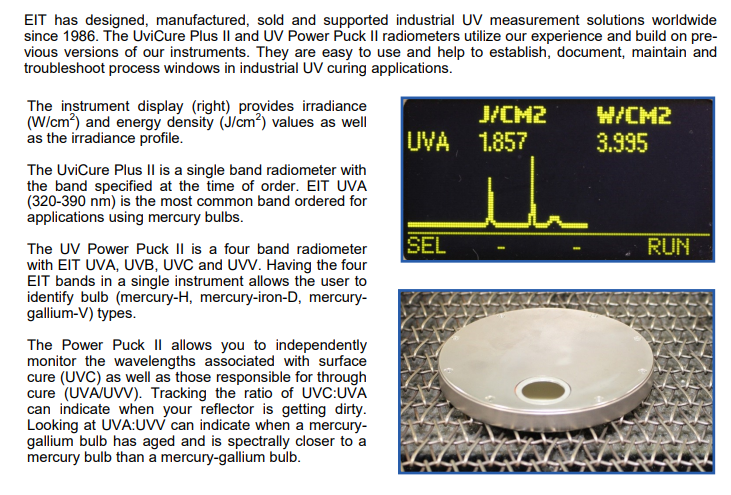
What is the testing principle behind the US-made EIT POWER PUCK II? What is its design principle?

The Power Puck II’s testing principle is based on photoelectric detection and spectral filtering technology, with the core objective being to measure the energy of ultraviolet radiation reaching the sensor’s surface. Its workflow can be broken down into the following steps:

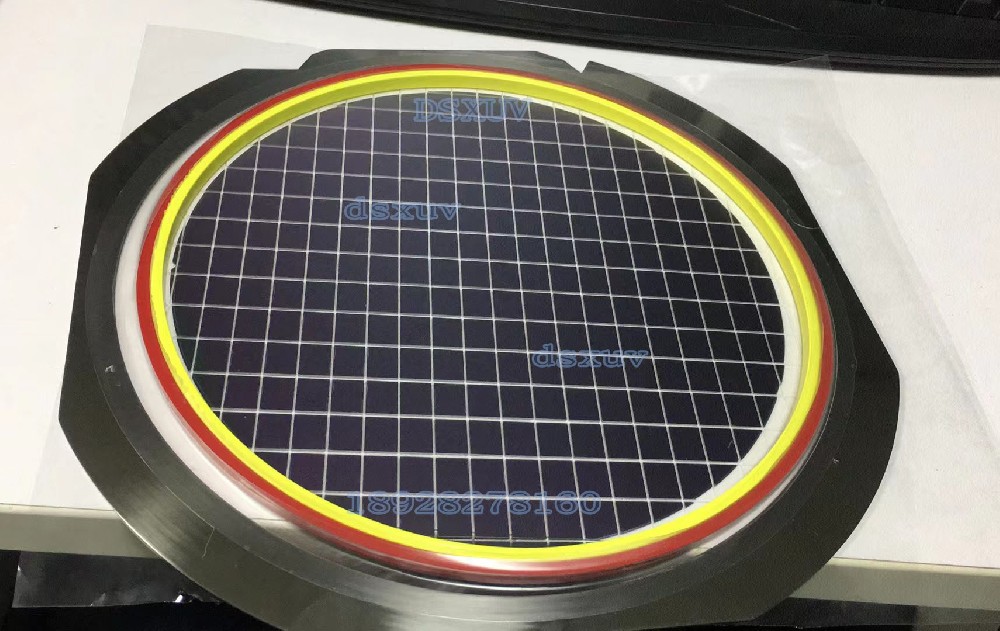
How can the spacing between die on a silicon wafer be increased? Why is a wafer die-spacing machine used?

Before and after the die expansion process on silicon wafers, the uniformity and quality of the cutting lines are assessed to facilitate subsequent operations.

UVCLED’s ultraviolet in-line water disinfection products represent a major trend in the current market

UVCLED’s ultraviolet flow-through water disinfection products represent a major trend in the current market.

How do you use UVC LEDs?

Firstly, select a constant-current power supply based on the power supply specifications. Secondly, solder the UVC LEDs. How should you solder the LEDs? The method you choose will depend on the design of your light and the number of LEDs involved.

Deep-ultraviolet UV LEDs for the self-disinfection of door handles

UV LED technology is becoming an increasingly integral part of our daily lives, helping to reduce bacteria and improve hygiene. As the technology advances, the range of applications for UV LEDs is expanding. For example, since the start of this year, a number of water bottles equipped with UV LEDs for automatic disinfection have appeared on the market. At the same time, applications involving drones fitted with UV LEDs have also emerged.

Can UVC LED deep ultraviolet disinfection lamps kill the novel coronavirus?

Let us now turn to coronaviruses. Coronaviruses are protein-enveloped, single-stranded, positive-sense RNA viruses. Six coronaviruses previously known to infect humans belong to the α genus (229E, NL63) and the β genus (OC43, HKU1, MERSr-CoV, SARSr-CoV). Of these, HKU1, MERSr-CoV and SARSr-CoV can all cause pneumonia. The most widely recognised are the 2003 Severe Acute Respiratory Syndrome (SARS) and the 2012 Middle East Respiratory Syndrome (MERS).

In which aspects of COVID-19 prevention and control can deep-ultraviolet LEDs play a role in disinfection?

Ultraviolet radiation can be divided into several bands: UVA, UVB, UVC and UVV. The band of ultraviolet radiation capable of sterilisation is UVC. Currently, there are two main types of UVC sterilisation devices available on the market: low-pressure mercury lamps and UVC LEDs.

A Brief Discussion on the Principles of Ultraviolet Disinfection

Ultraviolet radiation acts on the genetic material—DNA—of living cells, causing damage to the DNA and resulting in the death of bacteria; furthermore, ultraviolet radiation within specific wavelength ranges reacts with oxygen in the air to produce ozone, which has strong oxidising properties, thereby killing bacteria.

UVC LED Market Conditions and Development Trends

As a future alternative to mercury-based UV lamps, the issues of reducing costs and improving efficiency for UVC LEDs have become even more pressing in the wake of the pandemic. So, will the pandemic actually help to accelerate the pace of research and development within the industry? Will the UVC LED industry experience an early boom this year?

The lethal dose of ultraviolet radiation for the 2019-nCoV novel coronavirus is 1085 mJ/cm².

Based on the literature regarding coronaviruses of the genus Betacoronavirus, such as SARS and MERS, a UV-induced lethal dose of 1085 mJ/cm² was determined for the 2019-nCoV novel coronavirus NCP, with an initial TCID₅₀ concentration of approximately 10⁵.⁸ /mL, A basic model for deep-ultraviolet LEDs, which can serve as a reference for surface disinfection and air purification, is provided to aid in the development of various application products.