Differences in the DISCO TAIKO Manufacturing Process
TAIKO Process
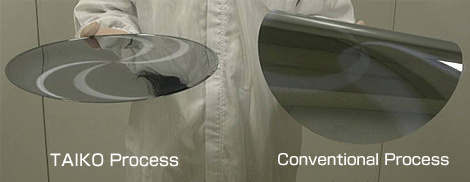
The TAIKO process is a new technology for wafer back-grinding developed by DISCO. Unlike conventional back-grinding methods, this technology preserves the outer edge of the wafer (approximately 3 mm) whilst grinding only the inner circular area to achieve a thinner wafer. The introduction of this technology helps to reduce the risks associated with handling thin wafers and minimises warpage.
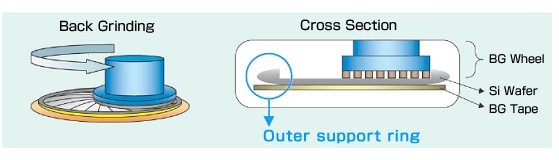
“The advantages of the ”TAIKO process’
By leaving a border around the edge of the chip
-
Reducing chip warpage
-
Improving the strength of the wafer
The chip is easier to use
The slimmed-down through-hole packaging makes it easier to process components such as terminal blocks
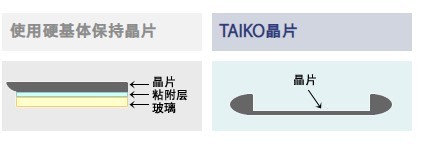
The advantages of using a monolithic structure rather than similar constructions such as those with a rigid substrate
-
When high-temperature processes (such as metal plating) are required following the thinning of the wafer, no outgassing occurs.
-
As it is a one-piece construction with a simple shape, this helps to minimise the ingress of particles.
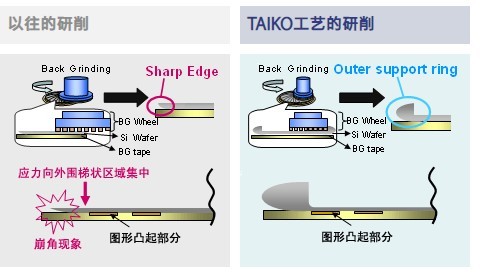
The advantages of not applying load to the peripheral areas during grinding
-
It is more convenient to have stepped chips in the peripheral grinding area
-
Zero corner collapse
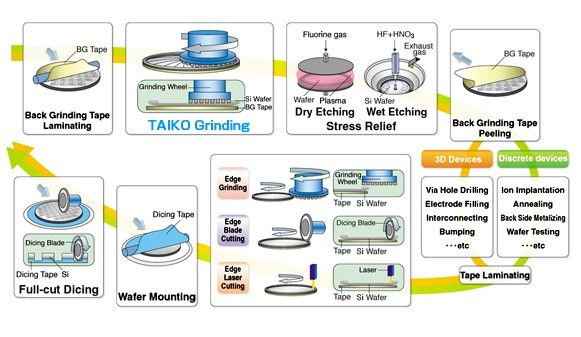
TAIKO Process Flow Chart
DSXUV specialises in the semiconductor wafer sectorUV De-gelling Machine、Wafer Coating MachineResearch, development and manufacturing. We welcome technical discussions.