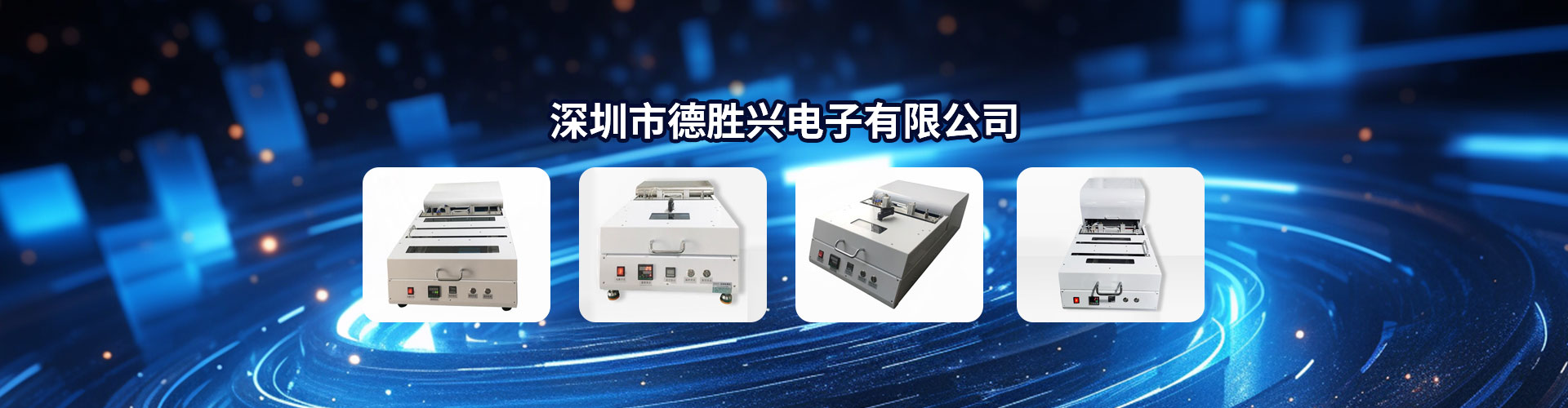
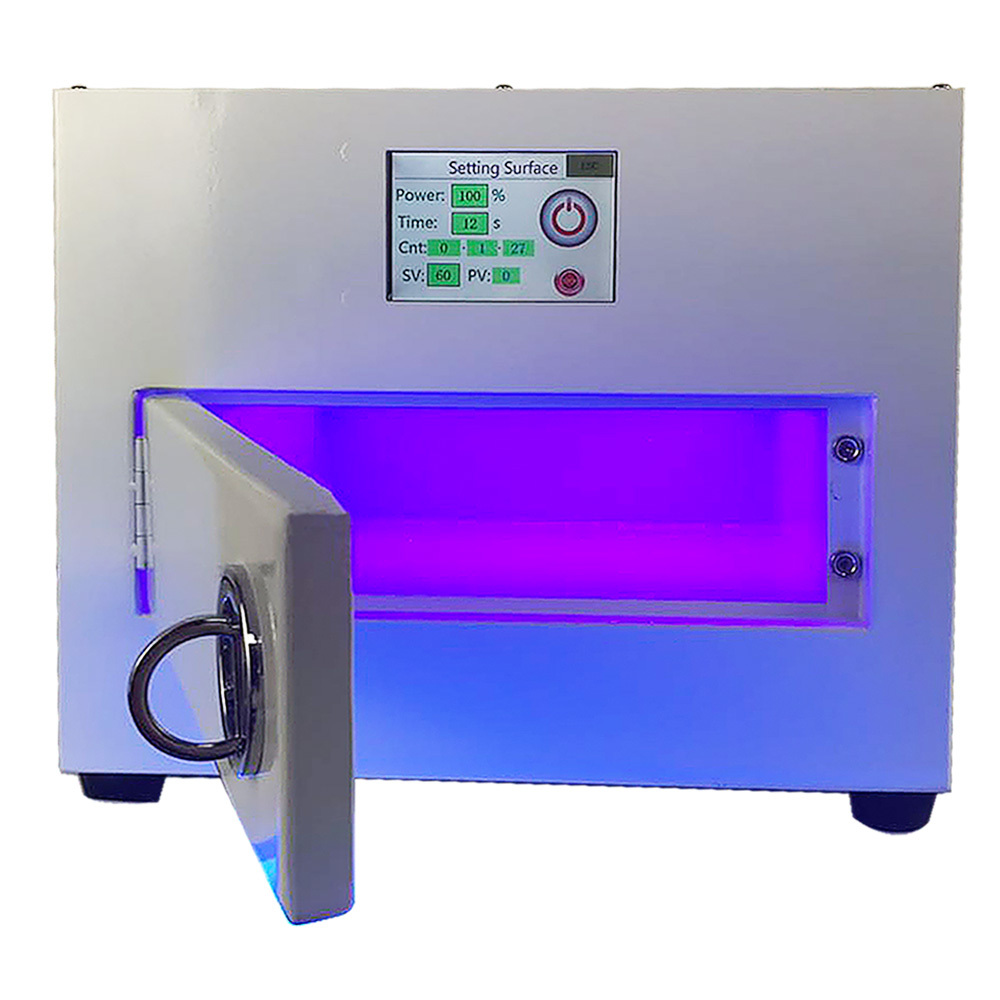
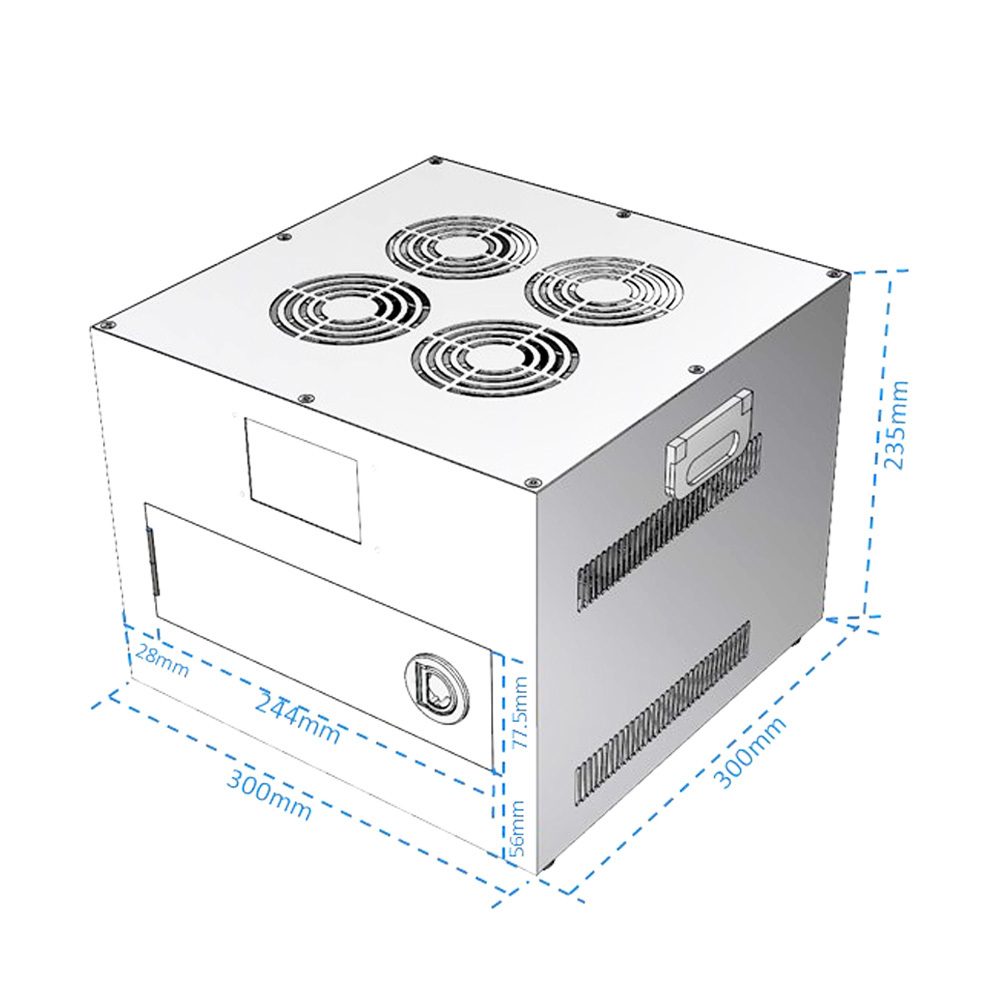
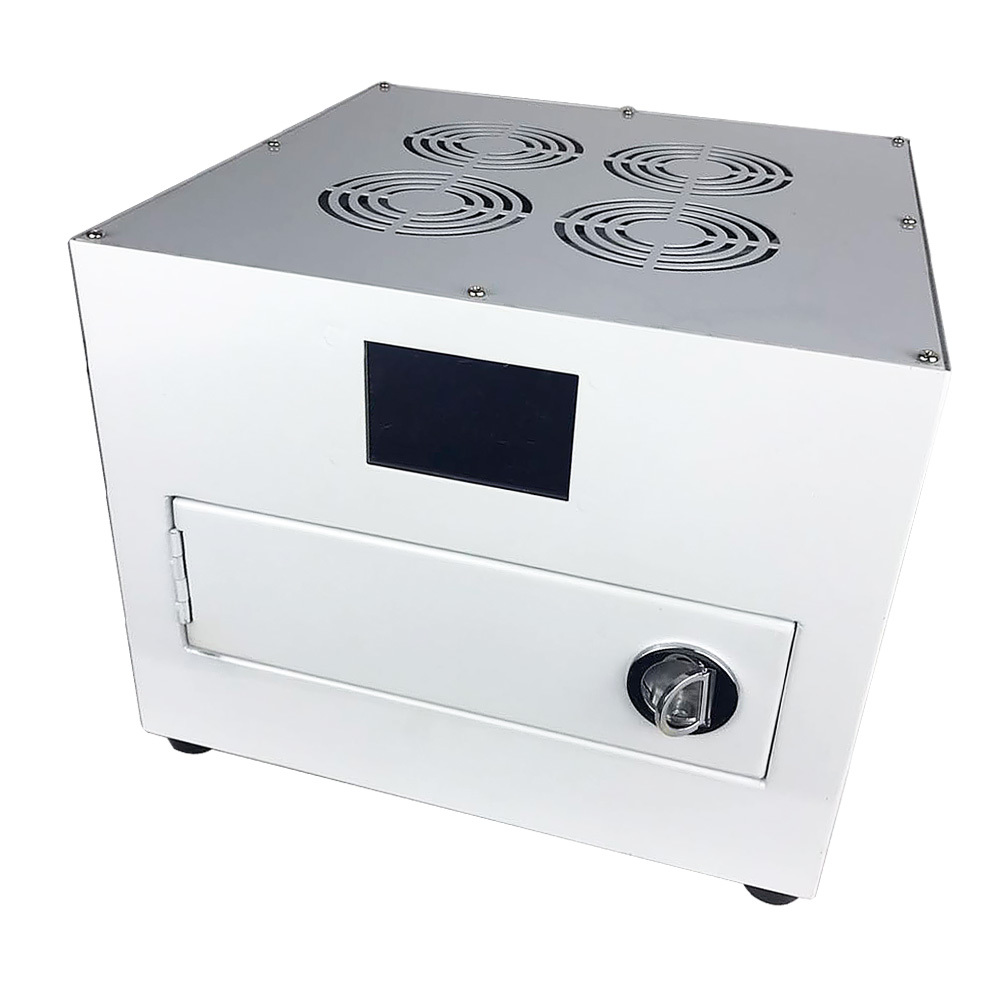
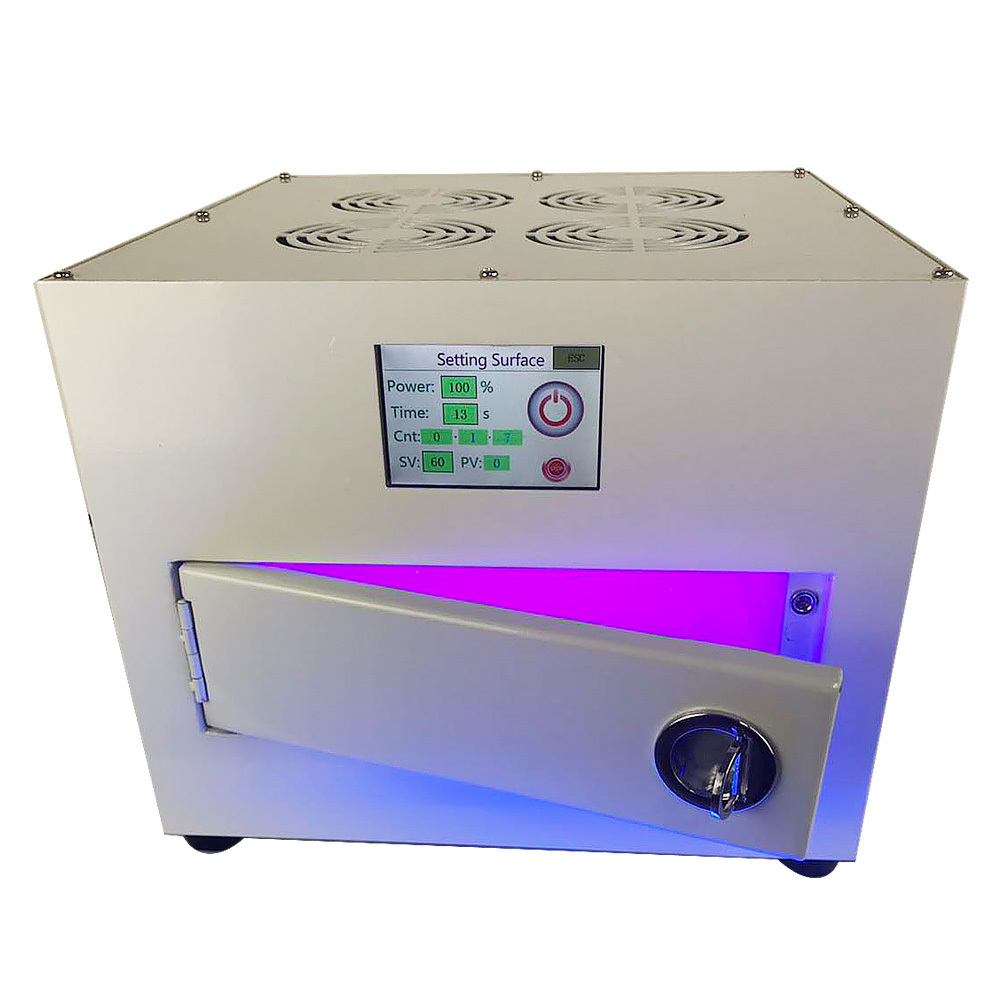
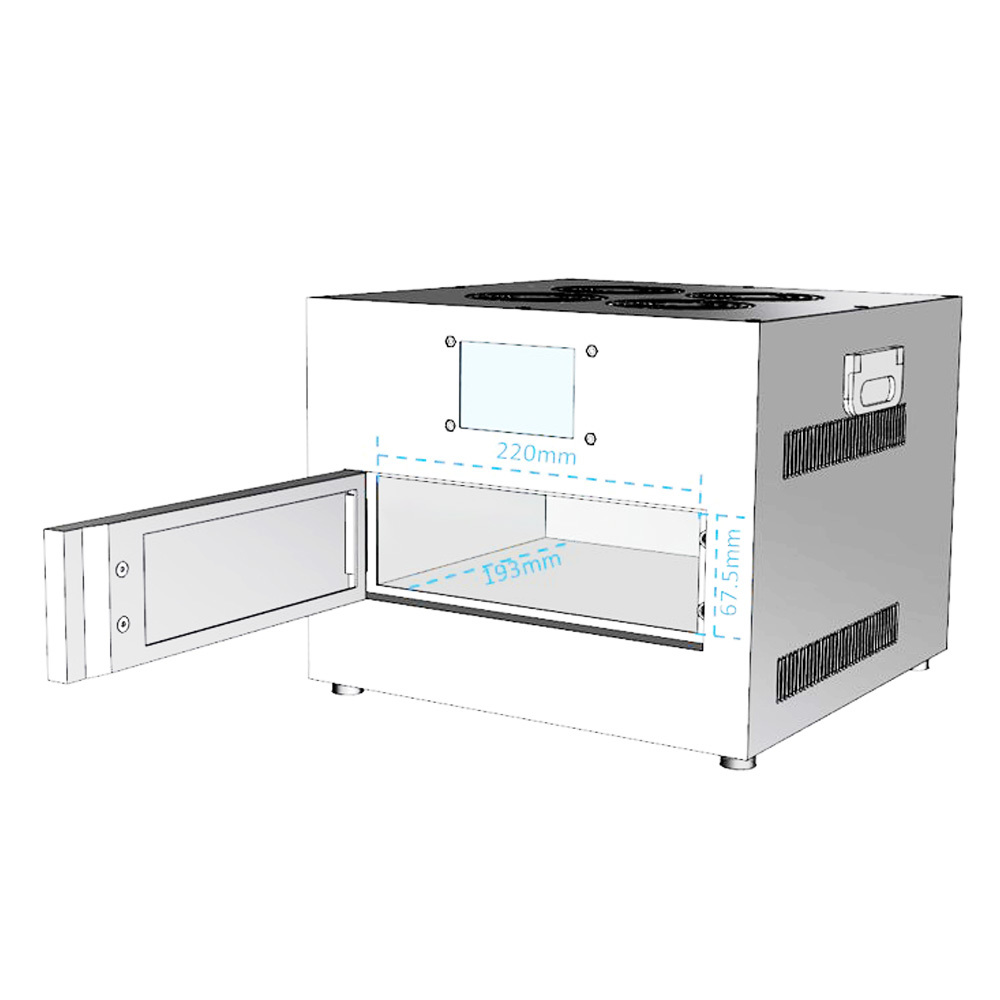
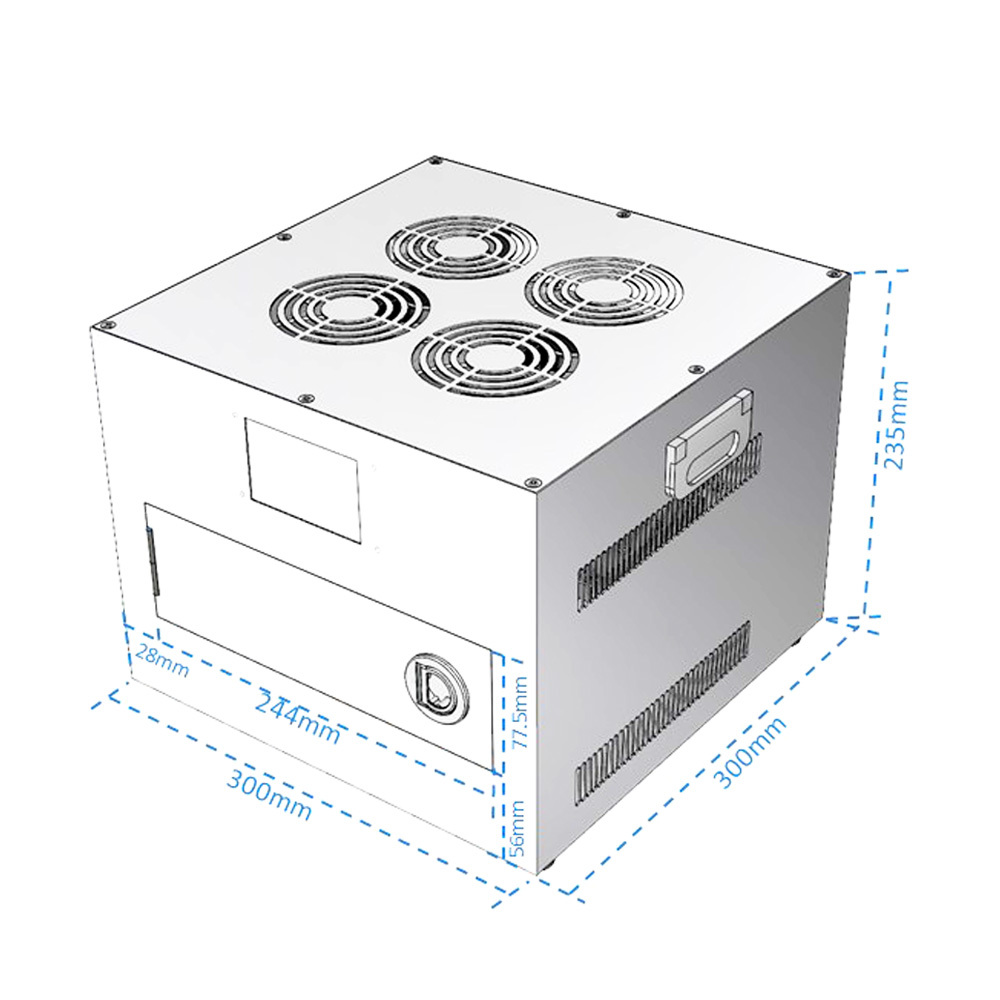
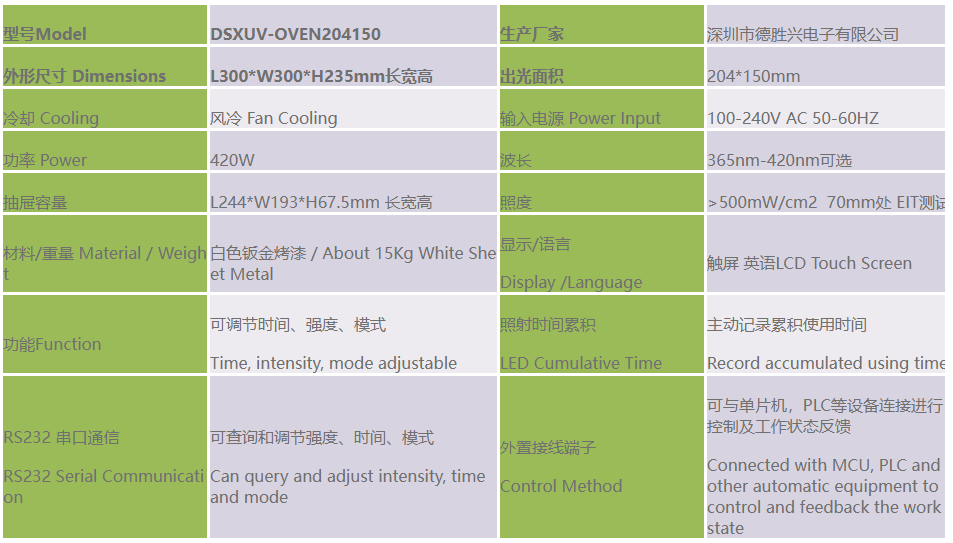
385nm UV LED oven, 3D printing curing, enclosed UV curing chamber, light-tight, Nichia LED chips
UV LED Curing Chamber 385nm Imported UV LED Light Source
Advantages: Fast curing, excellent results, no light leakage, and harmless to the body
Areas of application:
Microelectronics Industry – UV Curing Applications
1. Mobile phone component assembly (camera lenses, earpieces, microphones, casings, LCD modules, touchscreen coatings, etc.)
2. Hard disk head assembly (gold wire bonding, bearings, coils, chip bonding, etc.)
3. DVD players/digital cameras (lenses, lens bonding, circuit board reinforcement)
4. Assembly of motors and components (wiring, securing coils, securing coil ends, bonding PTC/NTC components, securing the protective transformer core)
5. Semiconductor chips (moisture-proof protective coating, wafer masking, wafer contamination inspection, UV tape exposure, wafer polishing inspection)
6. Sensor manufacturing (gas sensors, photoelectric sensors, fibre-optic sensors, optical encoders, etc.)
7. 3D printing curing
Applications of UV LED Curing in the PCB Industry
1. Securing components (capacitors, inductors, various plug-in components, screws, chips, etc.)
2. Moisture-proof potting and protection of core circuits and chips; anti-oxidation coating protection
3. Conformal (corner) coating for printed circuit boards
4. Earth wire, jumper wire, coil fixing
5. Through-hole mask for wave soldering
Applications of UV LED Curing in Medical Devices
UV adhesive bonding facilitates the cost-effective, automated assembly of medical devices. Today, advanced LED UV light source systems can cure solvent-free UV adhesives in a matter of seconds, whilst dispensing systems,
An effective and cost-efficient method for achieving consistent and repeatable bonding during the assembly of medical devices. The optimisation and control of UV light sources are vital for the manufacture of reliable medical devices.
The use of UV-curable adhesives offers many advantages, such as lower energy requirements, savings in curing time and space, increased productivity and easier automation.
UV adhesives are generally used to bond and seal medical devices, which require exceptionally high quality and the utmost reliability.
UV adhesives are typically used in the assembly of medical devices, for example, where it is necessary to bond: 1) different materials (or materials with different mechanical properties); 2) materials that are not thick enough to allow the use of welding methods; 3) pre-manufactured sub-assemblies.
1. Anaesthetic mask 2. Syringe 3. Infusion tube 4. Intravenous infusion tube 5. Vascular implant accessories 6. Endoscope 7. Arterial localisation
8. Tubular drainage devices 9. Air tubes 10. Blood oxygenators 11. Hearing aids 12. Detection, monitoring and imaging equipment
13. Biochips 14. Bonding PVC and thermoplastics (polycarbonate and ABS)
Optical Industry – ST-UV LED Light-Curing Applications
1. Assembly of optical components (lens assemblies, prisms, optical engine assemblies) 2. Assembly of imaging instruments (microscopes, endoscopes, infrared instruments, night-vision devices, probes, etc.)
Applications of UV LED Curing in the Optical Communications Industry
1. Passive components (wavelength division multiplexers (WDM), arrayed waveguide gratings (AWG), optical splitters (SPLITTER), optical isolators (ISOLATOR), optical couplers (COUPLOR), etc.),
Bonding or potting of various glass packaging structures, and the securing of micro-components, etc.
2. Active devices (coaxial devices such as TOSA, ROSA and BOSA; VCSELs; laser collimators, etc.), particularly low-cost, miniaturised plastic packaging structures for FTTX applications
3. Optical fibre cables (outer coating, marking, bonding, fibre-optic gyroscopes)
Research and Academic Institutions – ST-UVLED Light-Curing Applications
1. Polymer chemistry (nanocoatings, light-curing resins, photosensitisers, monomers, UV inks, etc.)
2. Medical polymer materials (medical plastics, catheters), microbiology
3. Photochemistry (photocatalysis, photoexcitation, photosynthesis, etc.)
4. Semiconductors (photo-accelerated etching, cutting, UV-curable tape, etc.)
Other applications
1. UV analysers, biological and genetic engineering, molecular genetics, medicine and public health, biological products, pharmaceutical research, public health and epidemic prevention, dye chemistry,
The petrochemical and textile industries, **law enforcement agencies**, and cultural heritage and archaeological departments—in short, any organisation requiring fluorescence analysis and verification—may use this equipment.
2. Biochemistry, microbiology, genetics, medicine and catalysis: each channel utilises UV LEDs of different wavelengths, ranging from 240 nm to 410 nm in 5 nm increments, to enable detailed analysis
3. UV therapy devices for medical applications, such as dental curing, vitiligo treatment and the promotion of wound healing.
4. Standard light source: as the light spectrum emitted by LEDs is relatively uniform and consistent in energy, they can serve as an effective standard light source
5. Forensic lighting sources, when combined with high-power LEDs, can emit light of various colours with consistent intensity across the spectrum from 365 nm to 780 nm,
It can provide light across 12 wavelength bands, ranging from ultraviolet, violet, blue, green, cyan, yellow, orange and red through to infrared, and includes a white light.
Curing characteristics of FPC surface protective resin:
1: Cold light source with no thermal radiation; particularly suitable for LCD edge sealing and film printing applications where a small heating area is required.
2: Instantly illuminates, immediately reaching a UV output of 1001 TP3T, with an irradiance of 8,000–9,000 mW/cm².
3: Compact design – enabling the equipment to be easily integrated into fully automated production lines and machinery.
4: It does not use toxic substances and does not produce ozone, making it a safer and more environmentally friendly alternative to traditional light sources.