- Specialist manufacturer of atmospheric pressure plasma cleaning machines – Free samples, extended warranty, outstanding quality
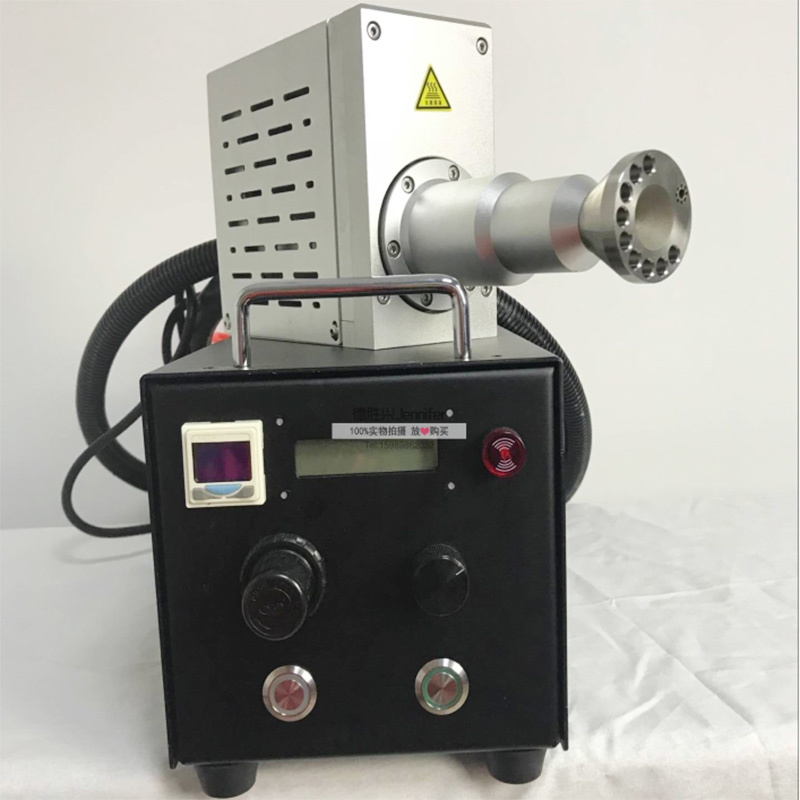
APO-RP1020D Atmospheric Plasma Surface Treatment System – Atmospheric Plasma Low-Temperature Jet Cleaning Equipment
I. Overview
A plasma cleaner, also known as a plasma cleaning machine or plasma surface treatment unit, is a brand-new high-tech innovation that utilises plasma to achieve results that cannot be attained by conventional cleaning methods.
- Plasma, like solids, liquids and gases, is a state of matter; it is also known as the fourth state of matter and does not belong to the three common states of matter—solid, liquid and gas. When sufficient energy is applied to a gas to ionise it, it enters the plasma state.
- The “active” components of a plasma include: ions, electrons, atoms, reactive species, nuclides in excited states (metastable states) and photons. A plasma cleaning machine utilises the properties of these active components to treat the surface of a sample, thereby achieving objectives such as cleaning and coating.
- The most notable feature of plasma cleaning technology is that it can be applied to any substrate, regardless of its type; it is effective on metals, semiconductors, oxides and most polymeric materials, such as polypropylene, polyester, polyimide, polyvinyl chloride, epoxy and even polytetrafluoroethylene,
- It can also be used to clean both entire and localised areas, as well as complex structures. Treatment with a plasma cleaner improves the wettability of material surfaces, enabling a wide range of materials to undergo coating, plating and other processes, whilst enhancing adhesion and bonding strength, and simultaneously removing organic contaminants, oil or grease.
II. Principles of Plasma Cleaners
Plasma is a state of matter. Matter usually exists in three states—solid, liquid and gas—but under certain special circumstances, a fourth state may occur, such as the matter found in the ionosphere of the Earth’s atmosphere.
- The following substances are present in a plasma: electrons in high-speed motion; neutral atoms, molecules and atomic groups (free radicals) in an excited state; ionised atoms and molecules; unreacted molecules and atoms, etc.,
- However, the material remains electrically neutral overall. The mechanism of plasma cleaning relies primarily on the “activating effect” of reactive particles within the plasma to remove contaminants from the surface of the object. In terms of the reaction mechanism,
- Plasma cleaning typically involves the following processes: inorganic gases are excited into a plasma state; gaseous substances are adsorbed onto a solid surface; the adsorbed groups react with molecules on the solid surface to form product molecules; the product molecules desorb to form a gaseous phase; and reaction residues are removed from the surface.
III. The Principle of Activated Cleaning
A. Physical effects: bombardment of particles against the surface of a material
The numerous active particles in the plasma—including ions, excited molecules and free radicals—interact with the surface of the solid sample, not only removing existing contaminants and impurities from the surface, but also causing etching,
- Roughening the surface of the sample to create a fine, uniform texture increases its specific surface area and enhances the adhesion on the solid surface.
B. Cross-linking: activation of bond energy
The energy of particles in the plasma ranges from 0 to 20 eV, whilst most of the bond energies in polymers lie between 0 and 10 eV; therefore, when the plasma acts on a solid surface, it can break the existing chemical bonds on that surface,
- The free radicals in the plasma form a network of cross-links with these bonds, significantly enhancing surface activity.
C. Chemical reaction: formation of new functional groups
If reactive gases are introduced into the gas stream, introducing new functional groups such as hydroxyl, amino and carboxyl groups, complex chemical reactions will occur on the surface of the activated material; these functional groups are all active groups, significantly increasing the surface activity of the material.
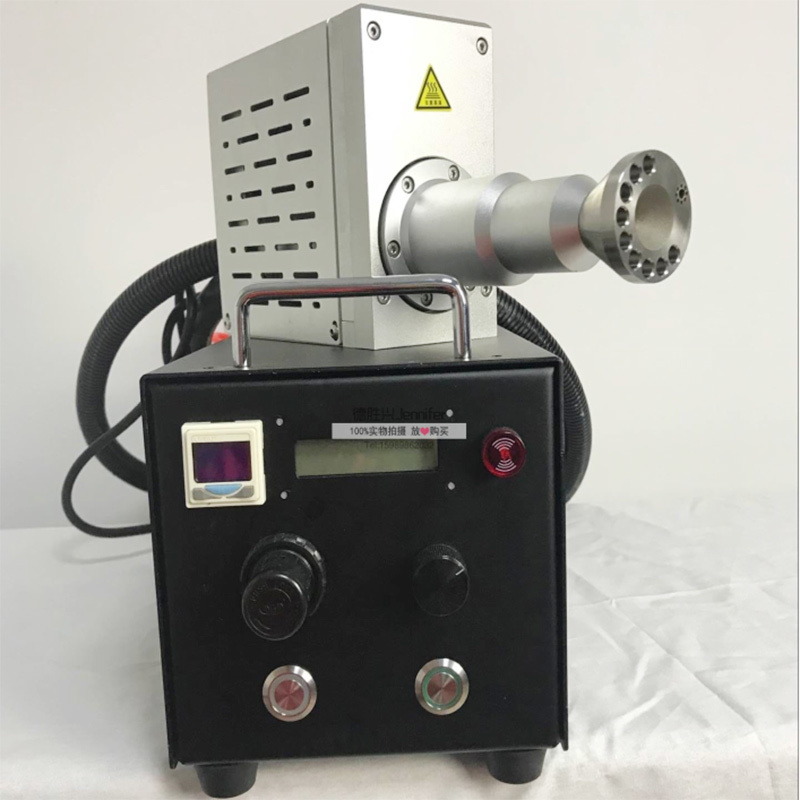
This image shows a pointed tip; if you require a pointed tip, please click herePointed-tip plasma cleaner
IV. Technical Specifications (Round Head)
| Name |
Jet-type AP plasma surface treatment system |
| Model |
DSX-APO-RP1020D |
| Power Supply |
220 V AC, 50/60 Hz |
| Power |
800 W / 25 kHz |
| Processing Height |
5–15 mm |
| Processing Width |
20–80 mm (optional) |
| Internal Control Mode |
Digital control |
| External Control Mode |
RS232 digital communication port, analogue control port |
| Work Gas |
Compressed Air (0.4 MPa) |
| Nozzle specifications |
180 mm long, 48 mm in diameter |
| Spray head dimensions (excluding the nozzle) |
180 × 85 × 155 (length × width × height) |
| Host controller dimensions |
500 × 185 × 170 mm (length × width × height) |
| Weight of the controller |
4 kg |
| Nozzle weight |
2.5 kg |
V. Product Advantages
1. A range of nozzle types is available as an option, suitable for use in various applications and catering to a wide variety of products and processing environments
2. The device is compact, making it easy to carry and move around, and saving space for customers
3. Can be installed in-line on the customer’s production line, thereby reducing the customer’s investment costs
4. Long service life, low maintenance and repair costs, and ease of cost control for customers
5. Environmental protection technology: The plasma treatment process is a gas-solid dry reaction; it does not consume water resources, requires no chemical additives and causes no environmental pollution.
6. Versatility: Suitable for granular and powdered products; fine coal powder and glass beads, for example, can be processed effectively;
7. Low temperature: close to room temperature; particularly suitable for polymeric materials; offers a longer shelf life and higher surface tension than corona and flame treatments.
8. High functionality: As it only affects the shallow surface layer of polymeric materials (10–1000 Å), it can endow them with one or more new functions whilst preserving their inherent properties;
9. Low cost: The system is simple, easy to operate and maintain, and capable of continuous operation; often, just a few bottles of gas can replace several thousand kilograms of cleaning solution, meaning that cleaning costs are significantly lower than those of wet cleaning methods.
10. Fully controllable process: All parameters can be set and recorded via the PLC for quality control.
11. There are no restrictions on the geometry of the items to be processed: whether large or small, simple or complex, components or textiles, all can be processed.
12. After plasma cleaning, the items to be cleaned are dry and can be sent to the next stage of the process without the need for further drying. This improves the processing efficiency of the entire production line;
13. Plasma cleaning enables users to avoid the health risks posed by harmful solvents, whilst also preventing the damage to the items being cleaned that can easily occur during wet cleaning;
14. The use of harmful ODS solvents such as trichloroethane is avoided; as this cleaning method does not produce harmful pollutants, it is therefore classified as an environmentally friendly ‘green’ cleaning method. This is becoming increasingly important given the high level of global concern for environmental protection;
15. Plasma is generated using high-frequency radio waves. Unlike direct light sources such as lasers, plasma is not highly directional, which enables it to penetrate deep into the minute pores and recesses of objects to carry out the cleaning process,
- It is therefore not necessary to give too much consideration to the shape of the object being cleaned. Furthermore, the cleaning results for these hard-to-clean areas are similar to, or even better than, those achieved with Freon cleaning;
16. The use of plasma cleaning can significantly improve cleaning efficiency. The entire cleaning process can be completed within a few minutes, resulting in high yield;
17. The vacuum level required for plasma cleaning is approximately 100 Pa, a condition that is easily achieved. Consequently, the equipment costs for such a system are not high, and as the cleaning process does not require the use of relatively expensive organic solvents,
- This results in lower overall costs compared to traditional wet cleaning processes;
18. The use of plasma cleaning eliminates the need for measures such as the transport, storage and disposal of cleaning solutions, making it easy to maintain a clean and hygienic production environment;
19. Plasma cleaning can be applied to any material; it is suitable for a wide variety of materials, whether metals, semiconductors or oxides,
- Plasma treatment can also be applied to polymeric materials (such as polypropylene, polyvinyl chloride, polytetrafluoroethylene, polyimide, polyester, epoxy resin and other polymers). It is therefore particularly suitable for materials that are not heat-resistant or solvent-resistant.
- Furthermore, it is possible to selectively clean the entire surface, specific areas or complex structures of the material;
20. Whilst cleaning and removing contaminants, it is also possible to improve the surface properties of the material itself. For example, this includes enhancing surface wettability and improving film adhesion, both of which are of great importance in many applications.
21. After plasma cleaning, the items being cleaned are dry and do not require further drying before being sent to the next stage of the process. This improves the processing efficiency of the entire production line;
22. Plasma cleaning enables users to avoid the health risks posed by harmful solvents, whilst also preventing the damage to the items being cleaned that can easily occur during wet cleaning;
23. The use of harmful ODS solvents such as trichloroethane is avoided; as this prevents the generation of harmful pollutants after cleaning, this cleaning method is therefore classified as an environmentally friendly ‘green’ cleaning method. This is becoming increasingly important given the high level of global concern for environmental protection;
24. Plasma is generated using high-frequency radio waves. Unlike direct light sources such as lasers, plasma is not highly directional, which enables it to penetrate deep into the minute pores and recesses of objects to carry out the cleaning task,
- It is therefore not necessary to give too much consideration to the shape of the object being cleaned. Furthermore, the cleaning results for these hard-to-clean areas are similar to, or even better than, those achieved with Freon cleaning;
25. The use of plasma cleaning can significantly improve cleaning efficiency. The entire cleaning process can be completed within a few minutes, resulting in high yield;
26. Plasma cleaning requires a vacuum level of approximately 100 Pa, which is easily achieved under these cleaning conditions. Consequently, the equipment costs for such a system are not high, and as the cleaning process does not require the use of relatively expensive organic solvents,
- This results in lower overall costs compared to traditional wet cleaning processes;
27. The use of plasma cleaning eliminates the need for measures such as the transport, storage and disposal of cleaning solutions, making it easy to maintain a clean and hygienic production environment;
28. Plasma cleaning can be applied to any type of material; it is suitable for a wide variety of materials, whether metals, semiconductors or oxides,
- Plasma treatment can also be applied to polymeric materials (such as polypropylene, polyvinyl chloride, polytetrafluoroethylene, polyimide, polyester, epoxy resin and other polymers). It is therefore particularly suitable for materials that are not heat-resistant or solvent-resistant.
- Furthermore, it is possible to selectively clean the entire surface, specific areas or complex structures of the material;
29. Whilst cleaning and removing contaminants, it is also possible to improve the surface properties of the material itself. For example, this includes enhancing surface wettability and improving film adhesion, both of which are of great importance in many applications.
VI. Main Features
Plasma comprises atoms, molecules, ions, electrons, reactive species, excited atoms, activated molecules and free radicals; these particles possess high energy and reactivity, sufficient to break almost all chemical bonds,
- By inducing a chemical reaction on any exposed surface—thereby breaking certain chemical bonds and allowing highly reactive substances, such as oxygen atoms, to bind to the surface—the hydrophilicity of the material’s surface is significantly enhanced,
- At the same time, it triggers new chemical reactions with organic macromolecules—such as oil residues—on the surface of the material, producing gaseous small molecules; for example, gaseous substances such as carbon dioxide and water vapour are released into the air, thereby achieving molecular-level cleaning of the material’s surface.

VII. Detailed Areas of Application
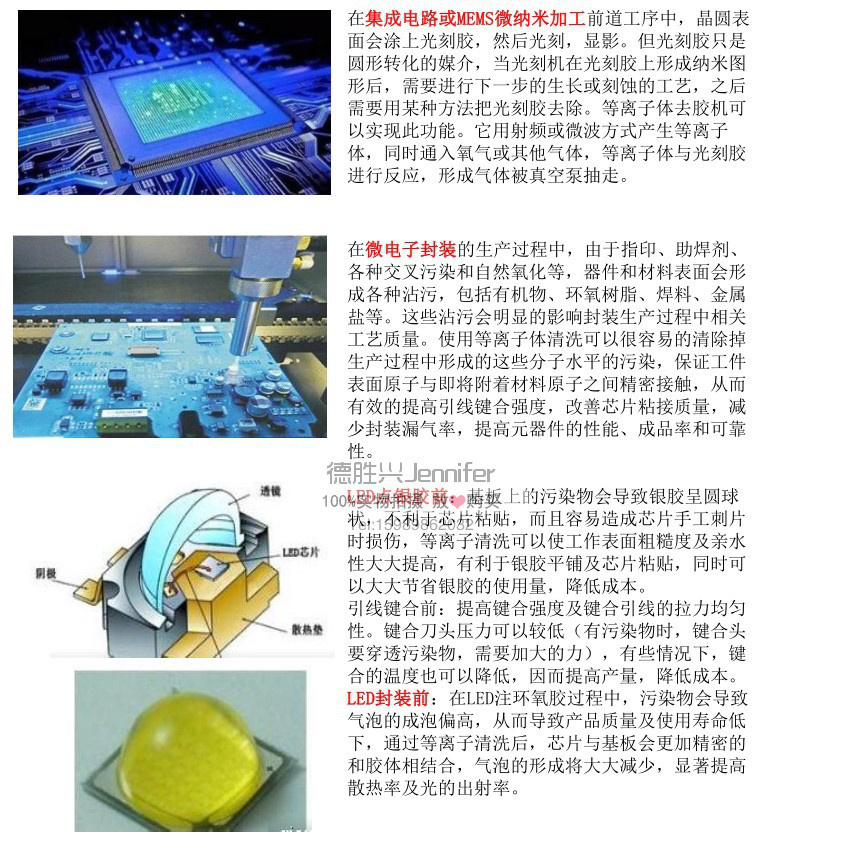
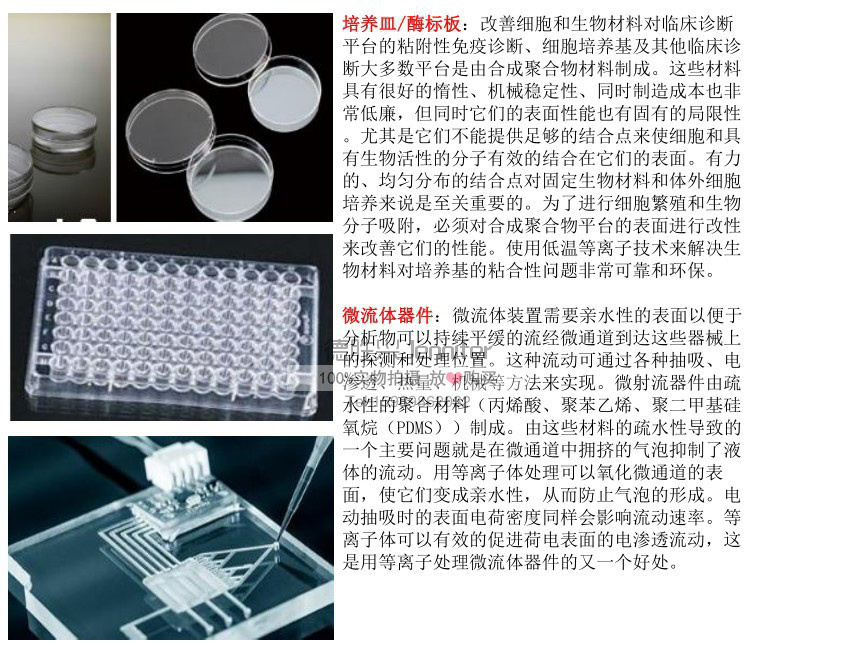
It is primarily used in the electronics industry for pre-treatment processes such as mobile phone case printing, coating and dispensing; for surface treatment of mobile phone screens; for surface cleaning of aerospace electrical connectors in the defence industry; and for pre-treatment prior to screen printing and transfer printing in general industrial applications.
In the rubber and plastics industry
In industrial applications, we have found that some rubber and plastic components present bonding difficulties when surface bonding is required; this is because rubber and plastic materials such as polypropylene and PTFE are non-polar,
- Without surface treatment, these materials perform very poorly—or indeed cannot be used at all—when subjected to processes such as printing, bonding or coating.
Some processes involve treating these rubber and plastic surfaces with chemical agents, which can alter the material’s adhesion properties; however, this method is difficult to master, the chemical agents themselves are toxic, the process is very cumbersome, and the costs are relatively high,
- Furthermore, chemical agents also affect the inherent excellent properties of rubber and plastic materials.
Surface treatment of these materials using plasma technology, under bombardment by high-speed, high-energy plasma, maximises the surface area of their structures,
- At the same time, an active layer is formed on the surface of the material, enabling rubber and plastics to be printed on, bonded to and coated. The use of plasma technology for surface treatment of rubber and plastics is straightforward; no harmful substances are produced before or after treatment, and the process delivers excellent results, high efficiency and low operating costs.
In the rubber and plastics industry
The fields of application for plasma surface treatment technology include rubber, composites, glass, textiles and metals, spanning a wide range of industries; in this article, we will focus primarily on its specific applications in certain sectors within the rubber and plastics industries.
In the automotive industry
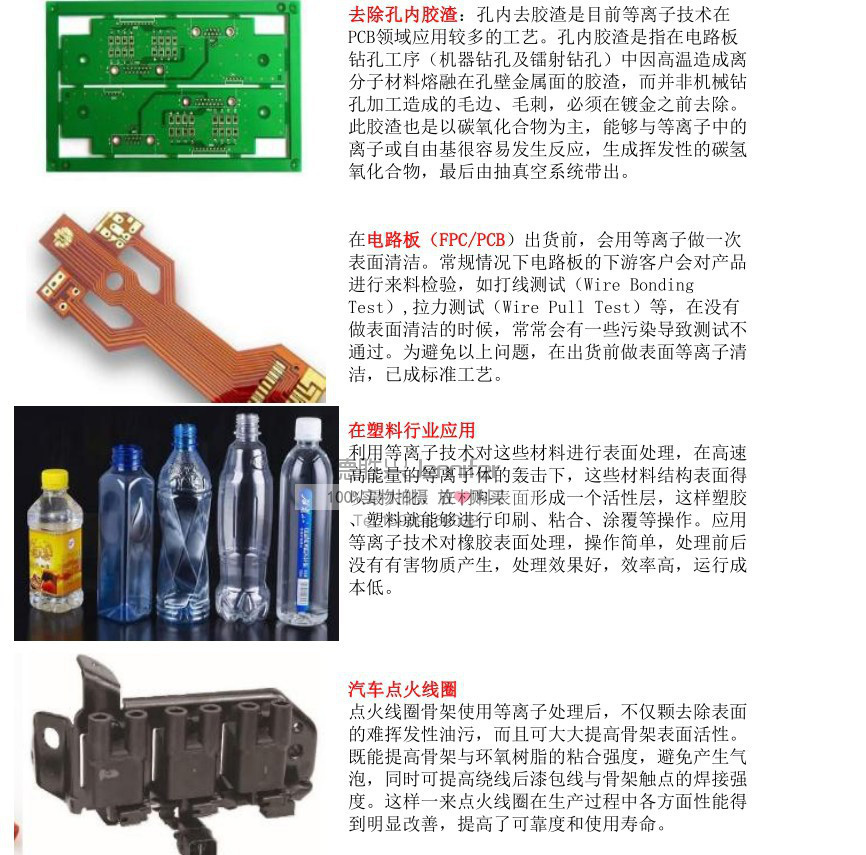
1. Ignition coil
As the automotive industry continues to develop, performance requirements across the board are becoming increasingly stringent. Ignition coils enhance engine power, with the most noticeable benefit being an increase in torque at low to medium speeds whilst driving; they also help remove carbon deposits, thereby providing better protection for the engine and extending its service life;
- It serves a number of functions, such as reducing or eliminating engine resonance and ensuring complete fuel combustion to reduce emissions. For an ignition coil to function to its full potential, its quality, reliability and service life must meet the required standards,
- However, there are still significant issues with the production process for ignition coils—after the coil form is encased in epoxy resin, the surface of the form contains a large amount of volatile oil residue before it is removed from the mould, resulting in an unreliable bond between the form and the epoxy resin,
- During use, the temperature rises sharply at the moment of ignition, causing bubbles to form in the minute gaps at the joint surfaces, which can damage the ignition coil; in severe cases, this may even lead to an explosion.
Plasma treatment of ignition coil bobbins not only removes hard-to-volatilise oil residues from the surface, but also significantly enhances the surface reactivity of the bobbin; this improves the bond strength between the bobbin and the epoxy resin, thereby preventing the formation of bubbles,
- At the same time, it improves the bond strength between the enamelled wire and the formers’ contact points after winding. As a result, the ignition coil’s performance is significantly improved in all respects during the production process, enhancing its reliability and service life.
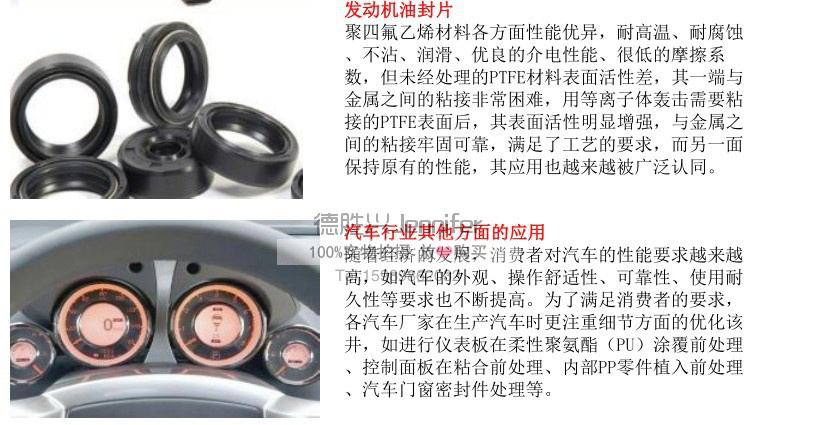
2. Engine oil seal gasket
The engine crankshaft oil seal serves to prevent engine oil from leaking out of the engine and to prevent foreign matter from entering the engine. The crankshaft oil seal is one of the engine’s components; it comes into contact with engine oil at high temperatures,
- It is therefore necessary to use materials with excellent heat and oil resistance. Polytetrafluoroethylene (PTFE) is commonly used in high-end saloon cars, and as performance requirements for motor vehicles continue to rise, an increasing number of manufacturers are gradually adopting this material; its prospects for application are very broad.
PTFE (polytetrafluoroethylene) exhibits excellent properties in all respects, including high-temperature resistance, corrosion resistance, non-stick properties, self-lubrication, excellent dielectric properties and a very low coefficient of friction; however, the surface of untreated PTFE has poor surface activity, making it very difficult to bond one end of the material to metal,
The product fails to meet quality requirements. To resolve this technical challenge, we must find a way to alter the surface properties of the PTFE (polytetrafluoroethylene) side that bonds to the metal, without affecting the properties of the other side.
- Although the use of sodium laurate solution in industrial applications can improve bonding performance to a certain extent, it alters the original properties of PTFE. Experiments have shown that after subjecting the PTFE surface to be bonded to plasma bombardment,
- Its surface activity is significantly enhanced, and it forms a strong and reliable bond with metals, thereby meeting the requirements of the manufacturing process, whilst retaining its original properties on the other side; its applications are also gaining increasingly widespread recognition.
3. Other applications in the automotive industry
As the economy develops, consumers are placing ever-higher demands on vehicle performance; expectations regarding aspects such as a car’s appearance, driving comfort, reliability and durability are also constantly rising.
- In order to meet consumer demands, car manufacturers are placing greater emphasis on optimising and refining details during the production process, such as by
(1) Pre-treatment of the dashboard prior to flexible polyurethane (PU) coating
(2) Control panel pre-treatment prior to bonding
(3) Pre-treatment of internal PP parts prior to stitching
(4) Treatment of automotive door and window seals
In the past, when dashboards or control panels were not pre-treated in any way, the coating results were very poor; the finish was not wear-resistant and the paint was prone to chipping. Whilst chemical treatment can improve the coating results, it also alters the properties of the substrate—such as the dashboard—thereby reducing its strength.
- Many manufacturers are already using plasma technology to treat these substrates; the bombardment by the plasma increases the surface reactivity of the material at a microscopic level, which significantly improves the coating results.
- Experiments have shown that different process parameters must be selected when treating different materials with a plasma cleaner in order to achieve a better activation effect.
In the electronics industry
1. Plastic components for hard drives
With the advancement of science and continuous technological progress, the performance of computer hard drives has steadily improved; their storage capacity has increased significantly, the number of platters has risen accordingly, and rotational speeds have reached as high as 7,200 revolutions per minute,
- This places increasingly high demands on the structure of hard disk drives; the quality of the connections between the drive’s internal components directly affects its stability, operational reliability and service life—factors that are directly linked to data security.
To ensure the quality of hard disk drives, leading manufacturers subject the internal plastic components to various treatments prior to bonding; plasma treatment is the most commonly used technique,
- The use of this technology effectively removes oil contamination from the surfaces of plastic components and increases their surface activity, thereby improving the adhesion of hard disk components.
- Experiments have shown that plastic components in hard disk drives that have undergone plasma treatment exhibit a significantly longer period of stable, continuous operation, with marked improvements in reliability and impact resistance.
2. Headphone earpiece
The coil inside the earphones, driven by the signal current, causes the diaphragm to vibrate continuously; the bonding between the coil and the diaphragm, as well as between the diaphragm and the earphone housing, directly affects the sound quality and service life of the earphones,
- If they become detached from one another, this will cause distortion, which will seriously affect the sound quality and lifespan of the headphones.
The diaphragm is extremely thin; to improve its adhesion, chemical treatment is required, which directly affects the material of the diaphragm and, consequently, the sound quality.
- Many manufacturers are preparing to use new technologies to treat diaphragms, and plasma treatment is one such method. This technology can effectively improve bonding performance to meet requirements without altering the material of the diaphragm.
- Experiments have shown that earphones treated with a plasma cleaner exhibit significantly improved adhesion between their various components; they do not suffer from distortion or similar issues even during prolonged high-frequency testing, and their service life has also been greatly extended.
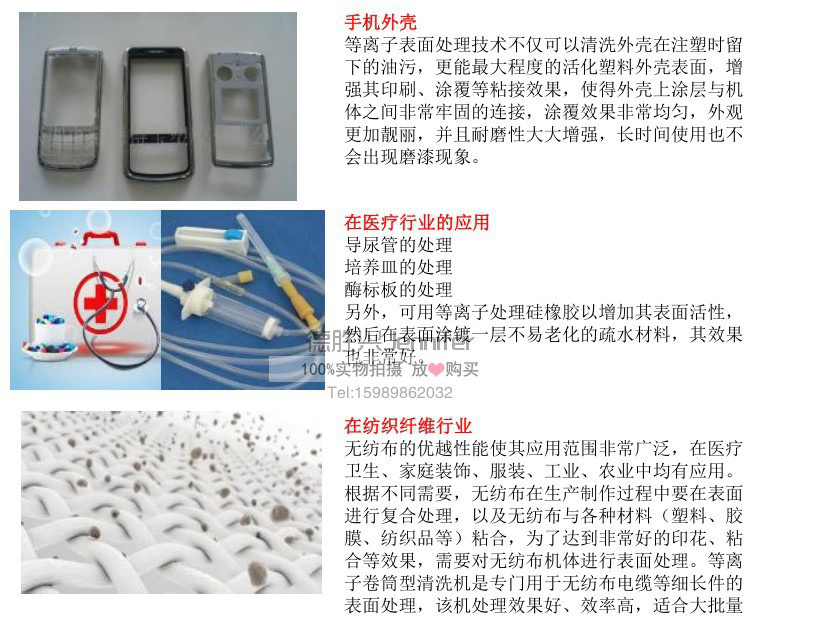
3. Mobile phone cases
There is a wide variety of mobile phones available, with a diverse range of designs; they come in bright colours and feature eye-catching logos. However, as anyone who uses a mobile phone knows, after a period of use, the paint on the casing tends to chip, and even the logo can become blurred, which seriously affects the phone’s appearance.
In an effort to find solutions to these problems, a well-known mobile phone manufacturer once treated the plastic casings of its handsets with chemical agents, which resulted in some improvement in the printing and bonding quality,
- However, this comes at the cost of reducing the hardness of the mobile phone casing; in the search for a better solution, plasma technology has emerged as the leading option.
- Plasma surface treatment technology not only removes oil residues left on the casing during injection moulding, but also maximises the activation of the plastic casing’s surface, thereby enhancing adhesion for processes such as printing and coating,
- This ensures a very strong bond between the coating and the substrate on the casing, resulting in a very uniform finish, a more attractive appearance and significantly enhanced wear resistance, with no chipping of the paint even after prolonged use.
In the defence sector
1. Aerospace electrical connectors
The bond strength between the insulator and the sealing body in electrical connectors has long been a factor affecting the development of domestically produced electrical connectors; this is particularly true in the aerospace sector, where the requirements for electrical connectors are even more stringent. The bond strength between untreated insulators and sealing bodies is extremely poor,
- Even when using specially formulated adhesives, the bonding performance fails to meet the requirements; furthermore, if the bond between the insulator and the sealing body is not sufficiently secure, electrical leakage may occur, preventing the electrical connector from achieving the required dielectric strength.
Domestic manufacturers specialising in the production of aviation electrical connectors, following intensive technical research and development, are gradually adopting and promoting plasma cleaning technology to clean the surfaces of connectors. Plasma cleaning not only removes surface grease but also enhances surface activity,
- This makes it very easy to apply adhesive to the connectors during bonding, ensuring a very even coating, which significantly improves the bonding results. Following testing by several major domestic manufacturers, electrical connectors that have undergone plasma treatment have shown a several-fold increase in tensile strength and a significant improvement in dielectric strength.
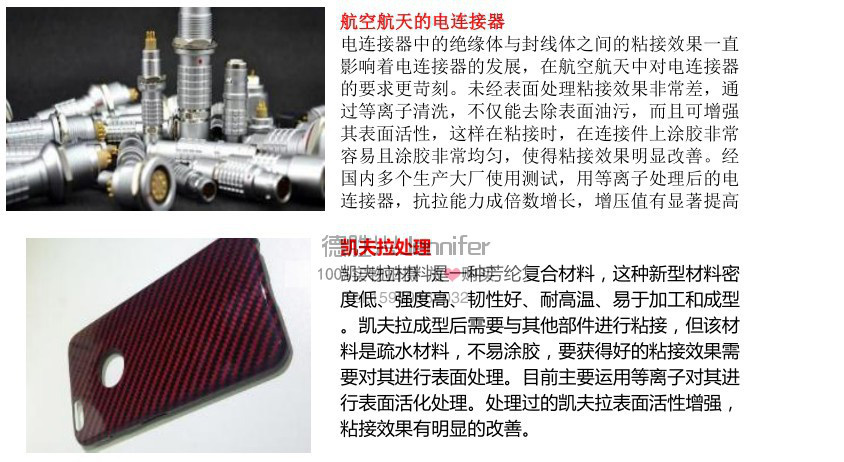
2. Kevlar treatment
Kevlar is an aramid composite material; this new material has attracted considerable attention due to its low density, high strength, good toughness, high-temperature resistance and ease of processing and moulding.
- As “Kevlar” is a tough, abrasion-resistant material that combines rigidity with flexibility, and possesses the unique ability to withstand cuts from knives and bullets, it is known in military circles as the “armoured guardian”.
Once moulded, Kevlar needs to be bonded to other components; however, as it is a hydrophobic material, it is difficult to apply adhesive to. To achieve a good bond, surface treatment is required, primarily involving plasma surface activation.
- The surface activity of treated Kevlar is enhanced, resulting in a marked improvement in bonding performance. Through continuous optimisation of the plasma treatment process parameters, these results will be further improved and the range of applications will continue to expand.
In the healthcare sector
1. Intravenous infusion set
When the infusion needle at the end of an infusion set is withdrawn during use, the needle hub may become detached from the needle tube. Should this occur, blood will leak out through the needle tube; if not dealt with promptly and correctly, this poses a serious risk to the patient.
- To prevent such incidents from occurring, it is essential to apply a surface treatment to the needle holder. The holes in the needle holder are extremely small and difficult to treat using conventional methods; however, as plasma is a gas in an ionised state, it can effectively treat even the smallest holes.
- Applying plasma surface activation treatment can improve surface activity and enhance the bond strength between the needle holder and the needle, thereby ensuring that they do not become detached from one another. The image below shows the needle holder undergoing surface cleaning and activation treatment in a plasma cleaner.
2. Handling of urinary catheters
Urinary catheters have been a boon to patients requiring indwelling cathetisation and are being used more and more widely in clinical practice; however, as their use increases, difficulties in removing them are also becoming increasingly common.
- In particular, with long-term indwelling urinary catheters, the ageing of the rubber can sometimes cause blockages in the balloon lumen; forcing their removal may lead to serious complications. To prevent the ageing of the surface of the silicone rubber that comes into contact with the human body, the surface must undergo oxygen plasma treatment.
- Using scanning electron microscopy (SEM), infrared spectroscopy (FTIR–ATR) and surface contact angle measurements, this study investigates changes in the surface structure, properties and chemical composition of natural latex urinary catheters before and after oxygen plasma treatment,
- The results indicate that the surface of the urinary catheter treated with oxygen plasma became smoother, with the surface contact angle decreasing from 84° to 67°, and no harmful groups were formed on the surface, suggesting that oxygen plasma treatment is an effective surface treatment method.
- Furthermore, silicone rubber can be treated with plasma to increase its surface activity, and then coated with a layer of a hydrophobic material that is resistant to ageing; this approach also yields excellent results.
In the textile fibre industry
The superior properties of non-woven fabrics mean they have a very wide range of applications, including in healthcare, home décor, clothing, industry and agriculture.
- Depending on specific requirements, non-woven fabrics undergo various surface treatments during the manufacturing process, including flame retardant treatment, singeing, water-repellent treatment, anti-slip treatment, anti-static treatment, coating, antibacterial and odour-resistant treatment, printing, and needle-punch lamination with various textiles,
- As well as the bonding of non-woven fabrics to various materials (plastics, plastic films, textiles, etc.), surface treatment of the non-woven substrate is required in order to achieve excellent results in printing, bonding and other processes.
- The plasma reel-to-reel cleaning machine is specifically designed for the surface treatment of slender items such as non-woven fabrics and cables. The machine delivers excellent results and high efficiency, making it suitable for high-volume production.