Types of glass used for the light-emitting ports of UV curing light sources
What type of glass is used for the viewing window of an ultraviolet irradiation unit?
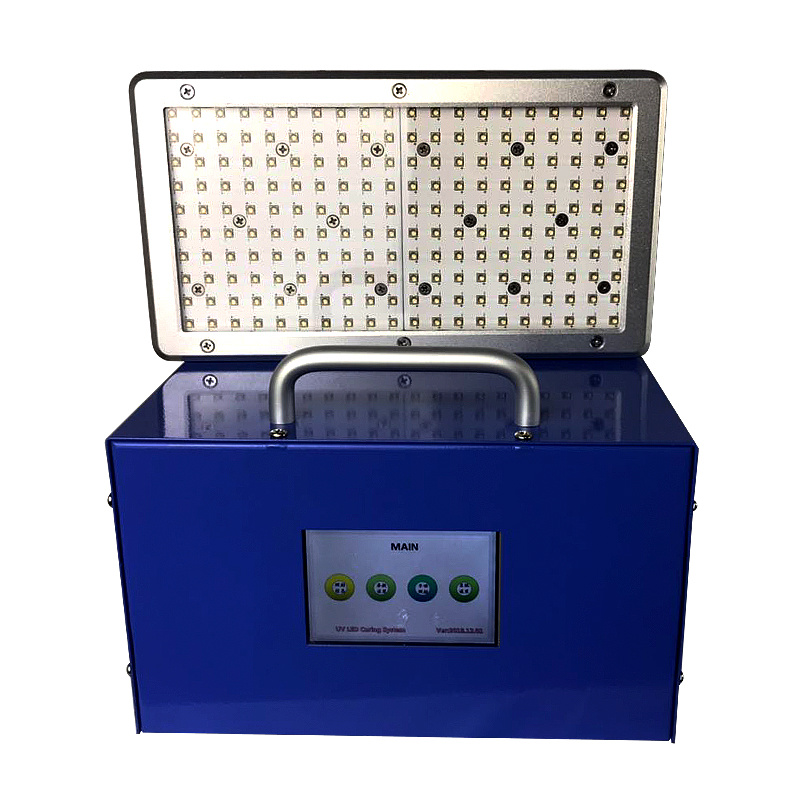
If you have previously purchased UV light sources, such asUV point light source,UV light source,UV surface light sourceOr take a UV torch, for example: you’ll notice that the light-emitting port is made of a material similar to glass. Today, I’ll give a systematic explanation of the materials used in this component.
Glass can be classified according to its main constituents as follows:Non-oxide glass和Oxide glass。
There are very few types and quantities of non-oxide glasses; the main types are sulphide glasses and halide glasses.
Oxide glasses are further classified into silicate glasses, borate glasses, phosphate glasses and so on.
Oxide glasses are generally classified according to their varying contents of silica, alkali metal oxides and alkaline earth metal oxides, as follows:
1. Quartz glass
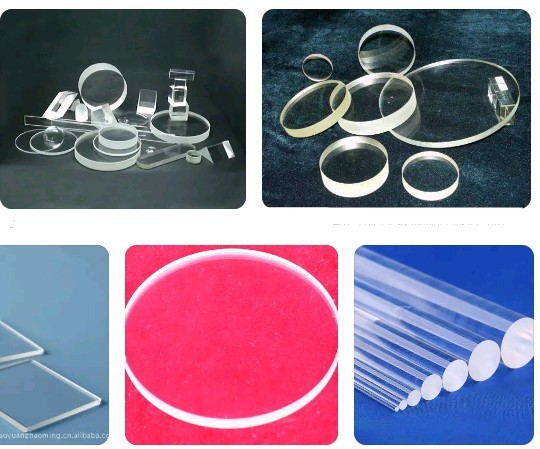
Quartz glass’ssilicon dioxideWith a purity of over 99.5%, it has a low coefficient of thermal expansion, high-temperature resistance and good chemical stability,Transparent to ultraviolet lightIt is similar to infrared light in that it has a high melting point, high viscosity and is difficult to shape. Quartz glass is widely used in technologies such as semiconductors, light sources, optical fibre communications and lasers, as well as in optical instruments.
2. High-silica glass
High-silica glass has a silica content of approximately 96% and its properties are similar to those of quartz glass.
3. Sodium-calcium glass
Sodium-calcium glass consists mainly of silicon dioxide and also contains 15% of sodium oxide and 16% of calcium oxide. It is inexpensive and easy to shape, making it suitable for large-scale production; it accounts for 90% of the total output of utility glass. Soda-lime glass can be used to produce glass bottles and jars, flat glass, tableware, light bulbs and other items.
4. Lead silicate glass
Lead silicate glass consists primarily of silicon dioxide and lead oxide; it possesses a uniquely high refractive index and high volume resistivity, and exhibits good wettability with metals. It is used in the manufacture of light bulbs, vacuum tube cores, crystalline glassware and flint optical glass, amongst other applications.
5. Aluminium silicate glass
Aluminosilicate glass, whose main constituents are silicon dioxide and aluminium oxide, has a high softening and deformation temperature and is used in the manufacture of discharge lamps, high-temperature glass thermometers, chemical combustion tubes and glass fibres, amongst other things.
6. Borosilicate glass
Also known as heat-resistant glass or hard glass, it consists primarily of silicon dioxide and barium oxide, and possesses excellent heat resistance and chemical stability. Borosilicate glass was invented in 1912, and its trade name is Pyrex.
It is a glass material that is resistant to high temperatures and possesses good thermal shock resistance. Borosilicate glass can be used to manufacture coffee pots, stoves, laboratory glassware, chandeliers and other equipment operating in high-temperature environments. It possesses excellent resistance to acid and chemical corrosion, as well as a very low coefficient of thermal expansion, and is therefore used in the manufacture of astronomical telescope lenses and other precision instruments. Furthermore, borosilicate glass can also be used as a reinforcing fibre in resins.
7. Phosphate glass
Phosphate glass, with phosphorus pentoxide as its main component, has a low refractive index and low dispersion, and is used in optical instruments.
In summary, it is evident that quartz glass and high-silica glass are the materials of choice for UV viewing windows; however, as quartz glass is relatively expensive to manufacture, low-cost borosilicate glass may be used as a substitute in the UVA band to reduce costs.
However, Shenzhen Deshengxing Electronics Co., Ltd. has consistently sought to achieve the ideal irradiation effect with ultraviolet light sources, remaining true to its original mission throughout; allUV LED light sourceWe have always used quartz glass lenses in our products. Thank you to our customers for your continued support!